Why the Best Tax Payment Tool Might Still Lose
The average accounting firm runs ten apps. One in three runs eleven or more. In four back to back demos, partners said the same thing. The tool works, but it would be one more place their clients log in. So they passed.
By Solon Angel
What if the best product is not what wins anymore?
I have spent the last month on demos where firms told me the tool works, they liked what it does, and then they said no. Not because of price. Not because of features. Because it would be another place their clients had to log in.
One partner at a small international firm was consolidating onto an all in one client platform. He was excited about tax payment automation. He also called a standalone tool "a second one" he did not want. That phrase stuck with me. Second is worse than second best. Second is a rejection of adding to a stack.
A senior partner at a large regional firm told me their clients see them as "one firm, not 10 firms." Everything they are doing this year is to reduce places clients have to log in. An operations lead at a mid-size CPA firm running CCH and SafeSend told me her worry was simple. "Another process in our process." She said it twice. She was not asking about payments. She was asking about workflow.
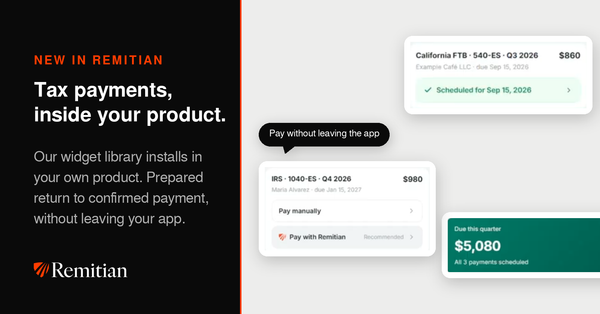
I heard the same thing from a software company serving 990 and trust filers. Their top customer request was to e-file and pay in one place. They did not want to send their users somewhere else. They wanted to embed the payment step inside their own product.
Four different firm types. Same story. The buying criterion has shifted, and if you are still selling depth of features you are selling into the wrong door.
Look at the numbers and it is not a surprise. Intuit's 2026 Accountant Technology Survey says the average firm runs about 10 apps to manage operations and clients. One in three firms is running 11 or more. 90 percent report fatigue and burnout as a significant issue. A quarter of them point directly at fragmented data as the cause. This is not a market waiting for the next great standalone tool. This is a market drowning in them.
Accounting Today called the 2026 trend "consolidation over proliferation." Tech stacks are shrinking from many products that do a few things to fewer products that do more. They also said AI on its own is no longer a differentiator. Depth and integration into daily workflow are what buyers reward now. Capterra's data on the AI accounting market says the same. Hundreds of vendors claim AI capabilities. Only 30 percent of firms say AI is embedded in day to day work. The winners will not be the tools with the most impressive demo. They will be the tools that live where the work already happens.
There is a specific shove pushing this harder in payments. Executive Order 14247 is moving federal payments off paper and onto electronic rails. Every firm that touches tax payments has to modernize whether they want to or not. And when I ask firms how they want to modernize, none of them say "add a new product." They say "make it happen inside what we already have."
So here is the honest read. If you are building a tax payment tool, you can be the best in your category and still lose. Being the best is not the point anymore. Being where the work is done is the point.
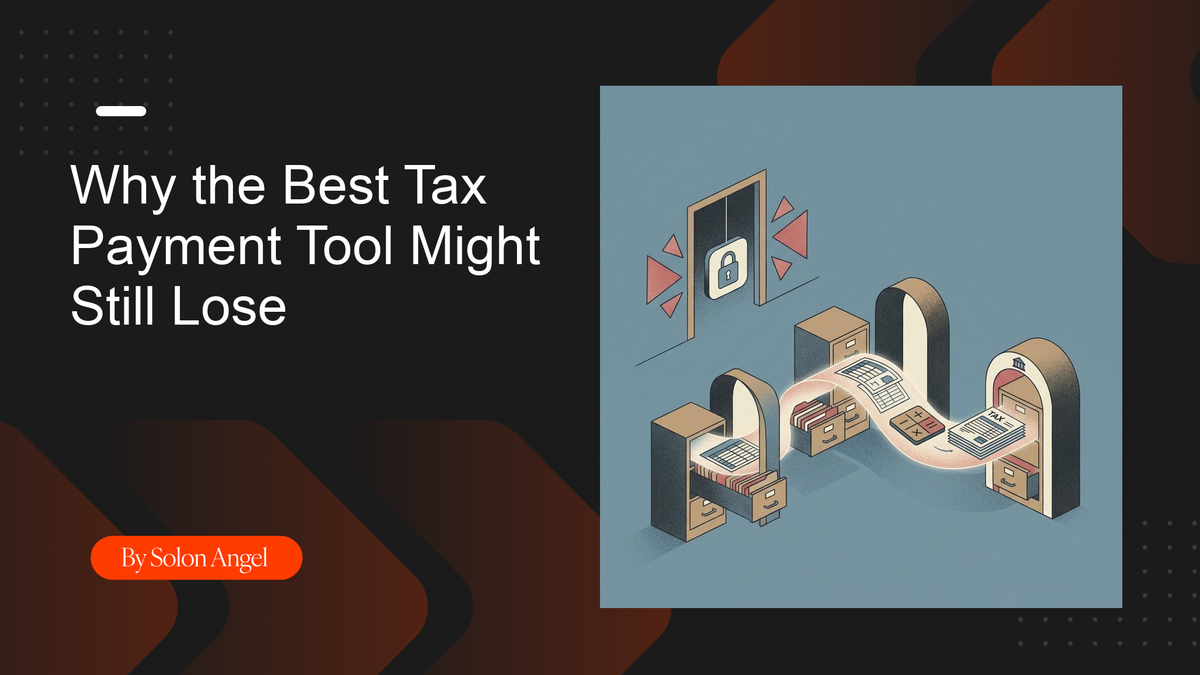
That is why we are spending less time this quarter perfecting standalone workflows and more time on distribution. Fitting into the accountant portal a firm already uses. Riding inside the tax platform their clients already log into. Slotting into the practice management system where the deadlines already live. This is not glamorous. It does not demo well. But it is the only path I can see through a market this saturated.
Buyers are not tired of tax payment problems. They are tired of vendors. The two are not the same. If we build like they are, we will build the best tool nobody uses.
I would rather be the one that quietly shows up inside the tools they already opened this morning.
Solon Angel is the Co-Founder and CEO of Remitian, the tax payment infrastructure platform for accounting firms, banks, and their clients.